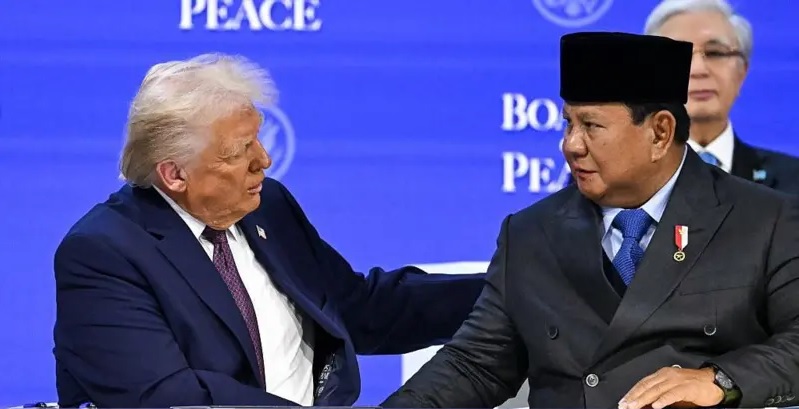

Jakarta, Indonesia – In a landmark diplomatic move, the Republic of Indonesia officially joined the American-formed Board of Peace (BOP) on January 20, 2026, during a virtual summit hosted by U.S. Secretary of State Elena Ramirez. The BOP, established in 2024 by the United States to foster global conflict resolution and humanitarian aid, now counts Indonesia as its 15th member, representing Southeast Asia’s largest economy. President Prabowo Subianto hailed the decision as a “strategic pivot toward collective security,” emphasizing Indonesia’s non-aligned foreign policy evolving to address modern threats like regional tensions in the South China Sea and climate-induced conflicts.
The Board’s formation stems from U.S. initiatives post-2023 global summits, aiming to create a neutral platform for mediation, peacekeeping funding, and counter-terrorism intelligence sharing among 14 initial members, including allies like Japan, Australia, and the UK. Indonesia’s entry, after months of negotiations, brings its vast archipelago’s strategic maritime position and G20 influence to the table. “This isn’t about dominance; it’s about dialogue,” Ramirez stated, noting Indonesia’s role in ASEAN could bridge divides between Western powers and emerging Global South voices.
One key benefit for Indonesia lies in enhanced security cooperation. Membership grants access to BOP’s $5 billion annual fund for joint military training and cyber defense tech, crucial as Indonesia faces piracy in the Malacca Strait and spillover from Myanmar’s instability. Experts like Jakarta-based analyst Dr. Sari Wijaya point out that this could modernize Indonesia’s navy, which lags behind neighbors, while shared intelligence on extremism—drawing from U.S. expertise—bolsters domestic counter-ISIS efforts without compromising sovereignty.
Economically, the perks are substantial. BOP members receive priority in U.S.-led green energy investments, aligning with Indonesia’s net-zero ambitions by 2060. Recent pledges include $2 billion for nickel-processing plants in Sulawesi, reducing reliance on Chinese supply chains and creating 50,000 jobs. Trade barriers ease too; Indonesia’s palm oil and textiles gain faster U.S. market entry, potentially boosting exports by 15% annually, per Ministry of Trade estimates.
Critics at home worry about over-reliance on Washington, but proponents argue the Board’s consensus-based voting—requiring 75% approval for actions—preserves Indonesia’s autonomy. As tensions simmer in the Indo-Pacific, this alliance positions Jakarta as a peacemaking heavyweight, reaping diplomatic clout, tech transfers, and sustainable growth. With Indonesia’s youth bulge and archipelagic challenges, BOP membership signals a bold step into a multipolar world.